
Care Guide
Light
Provide bright, indirect light.
Good light is particularly important for variegated plants because the white portions of the foliage contain little or no chlorophyll.
However, those pale areas can also be more vulnerable to scorching, so protect the plant from prolonged harsh direct sunlight.
Gentle morning sun may be tolerated when the plant is properly acclimated.
Water
Allow the upper portion of the potting mix to begin drying before watering thoroughly.
Water until excess drains freely and avoid allowing the roots to remain continuously saturated.
Don’t water automatically because a certain number of days have passed.
Check the soil.
Light, temperature, season, pot size, and active growth all affect how quickly a plant uses water.
Learn your plant’s rhythm rather than forcing it to follow yours.
Humidity
Moderate humidity is appreciated.
White Princess can grow successfully in typical household conditions, although somewhat higher humidity can be beneficial during active growth and while new leaves are developing.
Good airflow remains important.
Temperature
Warm, stable household temperatures are best.
Protect the plant from cold drafts and abrupt temperature changes.
Fertilizer
Feed periodically during active growth with a balanced houseplant fertilizer according to the product directions.
More fertilizer does not create more white variegation.
Overfertilizing can damage roots, so don’t sacrifice the health of the plant trying to influence what the next leaf looks like.
Growth Habit
White Princess generally has a relatively compact, upright growth habit compared with many strongly climbing Philodendrons.
As the plant grows larger, support may still be helpful if needed to keep growth stable and organized.
Give the foliage enough room to develop without being constantly rubbed against surrounding plants or objects.
A Note About Variegation
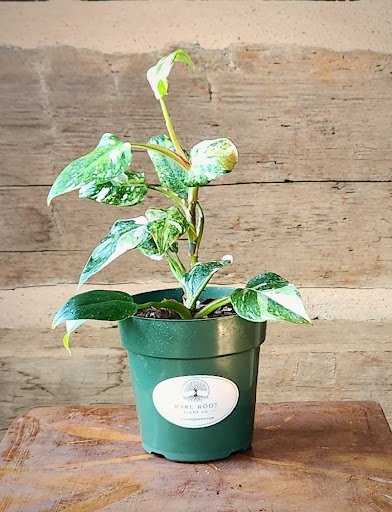
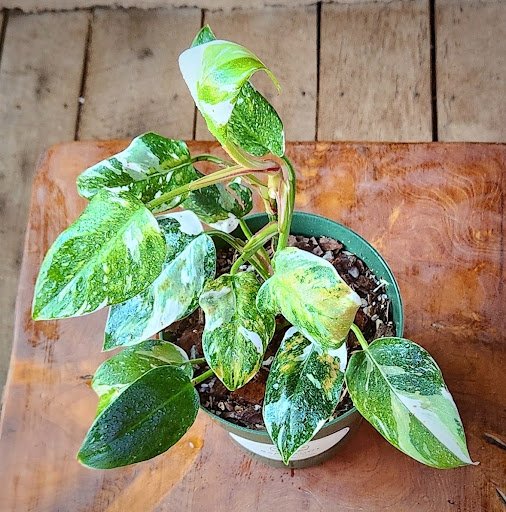
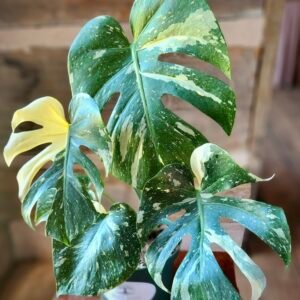
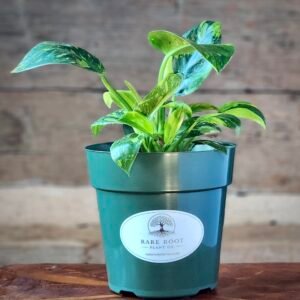
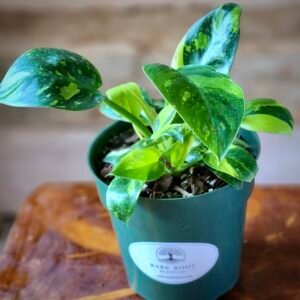
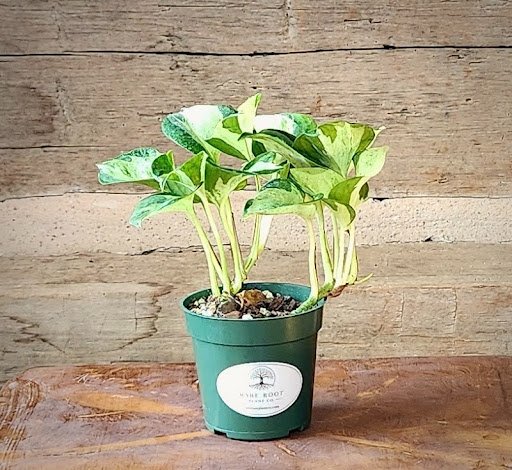
White Princess variegation naturally varies from leaf to leaf.
Some leaves may contain substantial white areas.
Others may be predominantly green.
And occasionally the plant may produce pink coloration as well.
Future variegation cannot responsibly be guaranteed.
White tissue contains little or no chlorophyll and may brown more readily than green portions of the leaf.
That doesn’t necessarily mean the plant is unhealthy.
Look at the whole plant.
And remember one of our favorite Rare Root rules:
Variegation is something to enjoy—not something the plant owes us.
White Princess, White Knight & White Wizard
These three Philodendron cultivars are frequently confused in the plant trade.
One useful distinguishing characteristic of White Princess is its green stems with pinkish to reddish coloration along the petioles/cataphyll areas, while White Wizard is generally associated with greener stems and White Knight with darker burgundy-toned stems.
Because individual plants and coloration can vary, Rare Root identifies plants using the overall characteristics of the specimen rather than relying on a single patch of color.
Pet Safety
Not pet friendly. Like other Philodendrons, White Princess contains insoluble calcium oxalate crystals that can cause painful oral irritation if chewed or ingested by cats or dogs.
Keep it away from pets and small children likely to chew foliage.
Reviews
There are no reviews yet.