
Care Guide
Light
Provide bright, indirect light to support healthy growth and attractive variegation.
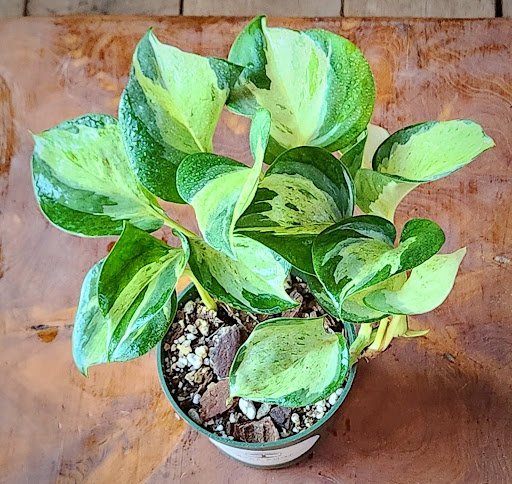
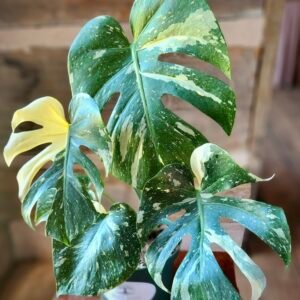
Because the cream and white portions of variegated foliage contain less chlorophyll than green tissue, good light is particularly useful for a highly variegated plant. However, prolonged harsh direct sunlight can scorch foliage, especially the lighter areas.
Water
Allow the upper portion of the potting mix to dry before watering thoroughly.
Let excess water drain freely and avoid leaving the roots in consistently saturated soil. Like other Pothos, Manjula generally tolerates some drying better than chronically wet roots.
Rather than watering according to a fixed schedule, check the soil. The plant’s water use will change with light, temperature, season, pot size, and growth.
Humidity
Normal household humidity is generally suitable.
Moderate humidity can be beneficial, but Manjula does not require greenhouse conditions to be successfully grown indoors. Good airflow remains important when humidity is higher.
Temperature
Warm, stable household conditions are best.
Protect the plant from cold drafts and abrupt temperature changes.
Fertilizer
Feed periodically during active growth with a balanced houseplant fertilizer according to the product directions.
Avoid overfertilizing in an attempt to produce faster growth or more variegation. Healthy roots, appropriate light, and consistent care are the better foundation.
Growth Habit
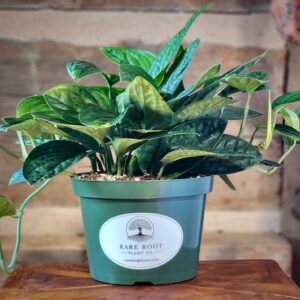
Manjula Pothos is a trailing and climbing vine.
Its stems can cascade from a hanging planter or shelf, or the plant can be given a suitable vertical support and allowed to climb.
Pruning longer vines can help create a fuller appearance, and healthy stem cuttings containing a node can be propagated to create new plants.
A Note About Variegation
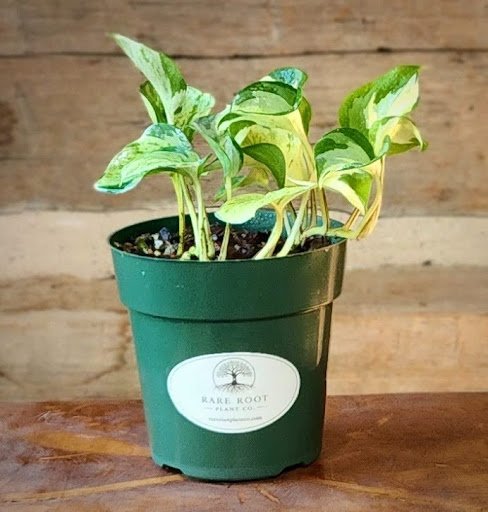
The amount, placement, and pattern of variegation can naturally differ from leaf to leaf.
Lighter portions of the foliage may also show cosmetic browning more readily than fully green tissue. A brown edge or imperfect patch on an otherwise healthy variegated leaf does not automatically mean the entire plant is unhealthy.
Look at the whole plant, not one spot on one leaf.
Pet Safety
Not pet friendly. Like other Epipremnum aureum cultivars, Manjula contains insoluble calcium oxalate crystals and can cause significant oral irritation if chewed or ingested by cats or dogs.
Keep it away from pets and children likely to chew foliage.
Reviews
There are no reviews yet.