
Care Guide
Light
Provide bright to medium indirect light.
Rattlesnake Plant grows naturally in filtered-light conditions and should be protected from prolonged intense direct sunlight, which can scorch or fade its foliage.
Avoid extremely dark locations as well. Good filtered light supports healthy growth and attractive leaf patterning.
Water
Rattlesnake Plant prefers its potting mix to remain evenly and lightly moist but never waterlogged.
Allow the surface to begin drying before watering thoroughly, then let excess water drain freely.
Try to avoid repeatedly allowing the entire root ball to become extremely dry followed by heavy watering. Consistency is more useful than a rigid watering calendar.
Water Quality
Members of this plant family can be sensitive to minerals and salts that accumulate in soil, and leaf-tip or edge browning can sometimes be associated with water quality.
If your plant develops persistent browning despite appropriate watering and humidity, using rainwater, distilled water, or another low-mineral water source is something worth trying.
One brown tip, however, is not an emergency.
Please don’t reorganize your entire household plumbing system because one leaf got crispy. 😂
Humidity
Rattlesnake Plant appreciates moderate to higher humidity.
Very dry indoor air can contribute to crispy leaf margins. A humidifier can be useful in particularly dry homes, but good airflow should accompany increased humidity.
Temperature
Warm, stable household conditions are best.
Protect the plant from cold drafts, heating vents, air-conditioning blasts, and abrupt temperature changes.
Fertilizer
Feed periodically during active growth with a balanced houseplant fertilizer according to the product directions.
Avoid excessive fertilizer, since accumulated fertilizer salts can damage sensitive roots and contribute to foliage problems.
Growth Habit
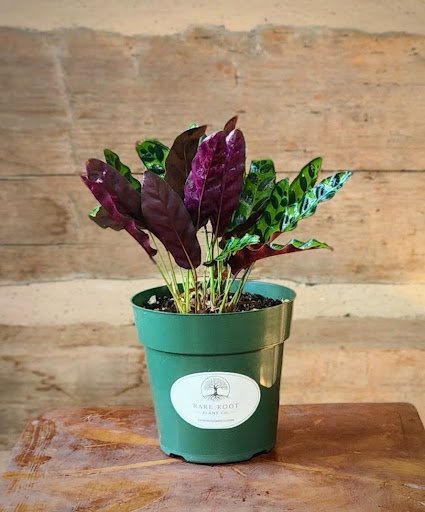
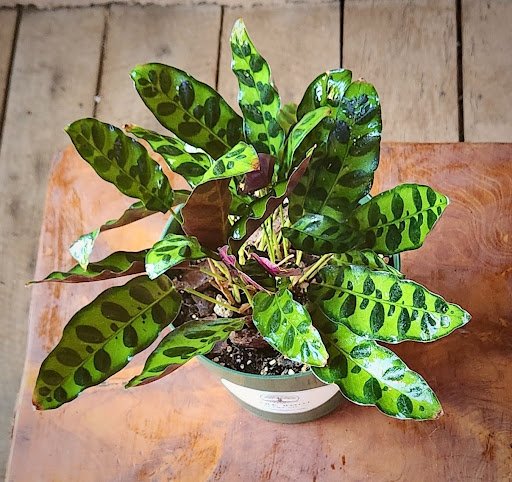
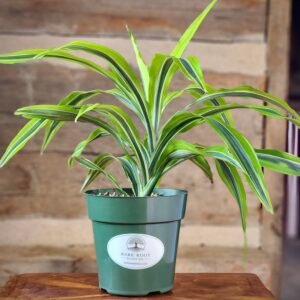
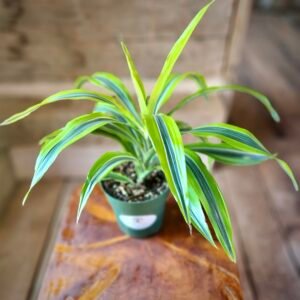
Rattlesnake Plant develops a clumping, upright-to-spreading growth habit from underground rhizomes rather than climbing or trailing.
New foliage typically emerges tightly rolled before unfurling into the plant’s characteristic long, patterned leaves.
Its leaves also change position naturally through the daily light-dark cycle. This movement is normal and one of the joys of growing plants in the prayer-plant family.
Pet Safety
Pet friendly. Rattlesnake Plant is considered non-toxic to cats and dogs.
As always, pet friendly doesn’t mean intended as a snack. Even non-toxic plant material can cause stomach upset if enough is eaten.
Reviews
There are no reviews yet.