
Care Guide
Light
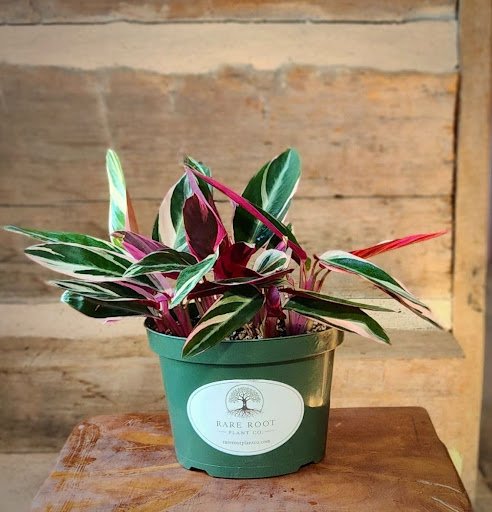
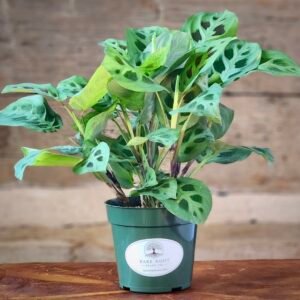
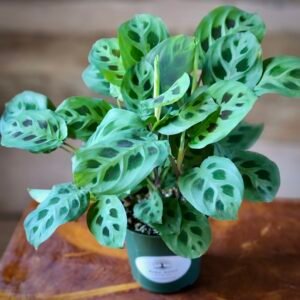
Give your Tricolor Prayer Plant bright, indirect or filtered light.
Direct, intense sunlight can fade or bleach its beautiful foliage, while an appropriately bright position supports healthy growth and coloration.
Water
Prayer Plants prefer their potting mix to remain lightly and consistently moist during active growth, but never waterlogged.
Water when the surface begins to dry rather than allowing the entire root ball to become completely dry. Always allow excess water to drain freely.
During slower winter growth, watering can be reduced somewhat. Poorly drained, overly wet soil can lead to root rot.
Humidity
Tricolor Prayer Plant appreciates higher humidity than many common houseplants.
If your home is particularly dry, grouping plants together or using a humidifier can help. Good airflow should accompany higher humidity.
Temperature
Warm, stable indoor conditions are best.
Protect your Prayer Plant from cold drafts, heating vents, air-conditioning blasts, and abrupt temperature changes. RHS recommends keeping this tropical plant above approximately 59°F/15°C when grown under glass year-round.
Fertilizer
During active growth, use a balanced houseplant fertilizer according to the product’s directions.
There’s no need to push the plant with excessive fertilizer. Consistent moisture, appropriate light, humidity, and healthy roots are much more important.
Growth Habit
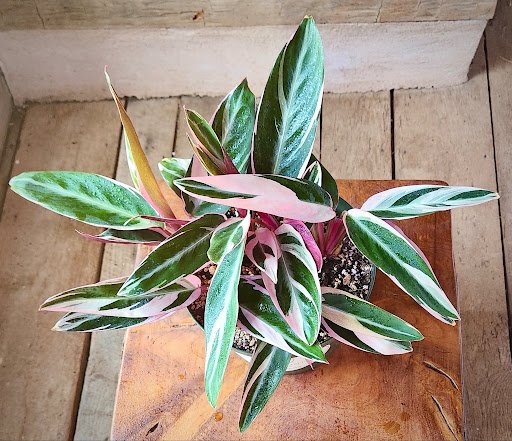
Tricolor Prayer Plant is a low-growing, clump-forming, rhizomatous plant, rather than an upright cane or climbing vine. It typically grows outward more than upward and can develop a lovely spreading habit as it matures.
Its leaves naturally change position in response to the daily light-dark cycle, becoming more erect at night. This movement is normal and part of what makes a Prayer Plant so interesting to live with.
And yes, Prayer Plants can flower. Small, relatively understated flowers may appear, although the foliage is very much the star of the show.
Pet Safety
Pet friendly. Prayer Plants are considered non-toxic to cats and dogs.
As always, non-toxic doesn’t mean we’d encourage a pet to make a salad out of it. Eating plant material can still cause stomach upset.
Reviews
There are no reviews yet.