
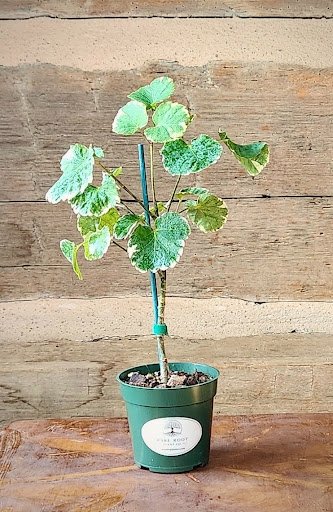
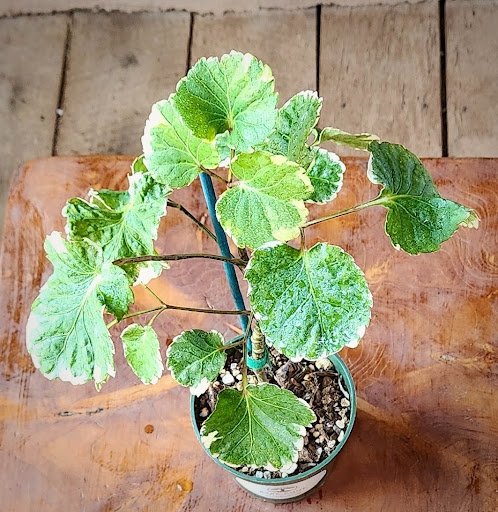
Care Guide
Light
Provide bright, indirect light.
Balfour Aralia appreciates abundant filtered light indoors. Protect it from prolonged harsh direct sunlight, particularly if it has not been acclimated to stronger light.
Very low light can result in weaker or sparse growth.
Water
Water when the upper portion of the potting mix has begun to dry.
Then water thoroughly and allow excess to drain freely.
Avoid allowing the roots to remain continuously saturated, but also try not to swing repeatedly between extremely dry soil and heavy watering.
Balfour Aralia generally appreciates consistency more than extremes.
And as always:
Check the soil.
Not the day of the week.
Humidity
Moderate to higher humidity is appreciated.
Very dry indoor air can contribute to foliage problems, particularly during winter when heating systems are running.
A humidifier may be useful in particularly dry environments, but good airflow remains important.
Temperature
Warm, stable household temperatures are best.
Protect Balfour Aralia from cold drafts, heating and air-conditioning vents, and abrupt temperature changes.
This is not the plant we’d recommend placing beside the door that gets blasted with freezing air every time someone lets the dog out in January.
Fertilizer
Feed periodically during active growth with a balanced houseplant fertilizer according to the product directions.
Reduce feeding when growth naturally slows.
Avoid excessive fertilizer; steady healthy growth is preferable to trying to push the plant quickly.
Growth Habit
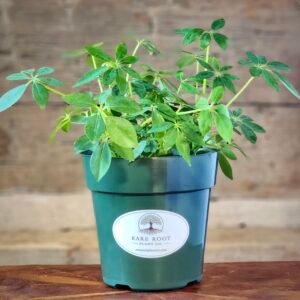
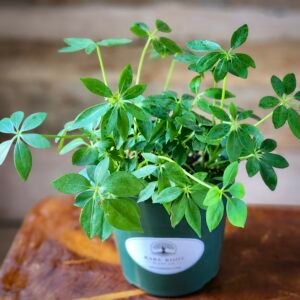
Balfour Aralia develops an upright, woody, branching shrub or small-tree form.
Indoors, pruning can be used to control height, encourage branching, and maintain the shape that best suits your space.
Its distinctive rounded foliage creates a softer silhouette than many other tree-form houseplants.
A Note About Leaf Drop
A few dropped leaves do not necessarily mean disaster.
Aralias can respond to environmental stress or abrupt changes by shedding foliage.
If leaf drop occurs, look at the entire situation before reacting:
Has the plant recently moved?
Has the temperature changed?
Is the soil remaining too wet—or becoming excessively dry?
Has indoor humidity changed?
Is there a pest issue?
Rather than immediately changing everything, observe the plant and look for the most likely cause.
Sometimes frantic plant parenting creates more problems than the original problem did.
Ask us how we know.
Pet Safety
Not considered pet safe. Balfour Aralia should be kept away from cats, dogs, and children likely to chew or ingest the foliage.
Reviews
There are no reviews yet.