
Care Guide
Light
Provide bright, indirect light for healthy, compact growth.
Cupid Peperomia can tolerate somewhat lower indoor light, although growth may become slower or less full.
Protect it from prolonged harsh direct sunlight, which can scorch the foliage.
Water
Allow the potting mix to dry somewhat between waterings.
Cupid Peperomia’s slightly fleshy foliage stores some water, and consistently saturated soil can cause root problems.
When the plant is ready, water thoroughly and allow excess water to drain freely.
Rather than following a rigid schedule:
Check the soil. Check the plant. Then decide.
Humidity
Average household humidity is generally suitable.
Cupid Peperomia can appreciate moderate humidity but does not require unusually high humidity to grow successfully indoors.
That makes it a nice option for someone whose response to “You’ll need a humidifier” is:
“Then I believe I need a different plant.”
Temperature
Warm, stable household temperatures are best.
Protect the plant from cold drafts and abrupt temperature changes.
Fertilizer
Feed periodically during active growth with a balanced houseplant fertilizer according to the product directions.
Peperomias are not particularly heavy feeders, so avoid excessive fertilizer in an attempt to force faster growth.
Growth Habit
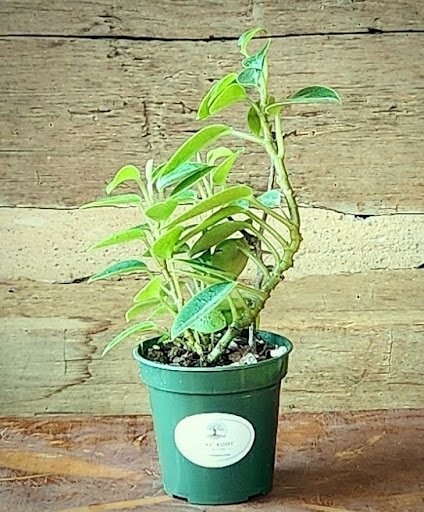
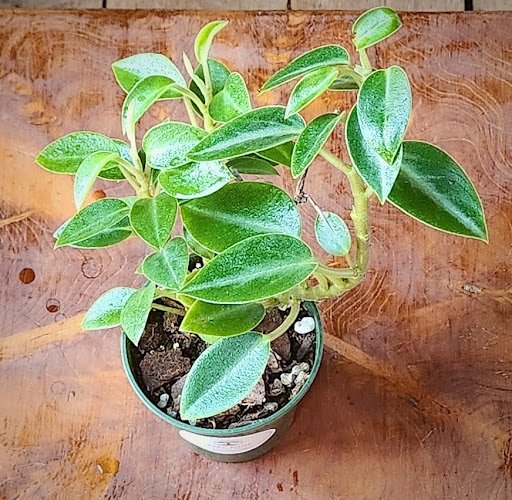
Cupid Peperomia has a trailing to softly climbing growth habit.
Its slender stems can spill naturally from shelves and hanging planters, or the plant can be allowed to ramble around a small support.
Occasional pruning can encourage fuller growth and keep vines at the length you prefer.
And unlike some of our larger climbing Collectors, Cupid isn’t secretly plotting to annex the dining room.
Probably.
Flowers
Cupid Peperomia may produce the slender flower spikes characteristic of Peperomias.
They’re not traditional showy flowers and can look a little unusual compared with the foliage.
Nothing has gone wrong.
Your plant is simply flowering in the distinctly Peperomia way.
Pet Safety
Pet friendly. Peperomia scandens is considered non-toxic to cats and dogs.
As always, pet friendly doesn’t mean we recommend turning it into salad. Eating plant material can still cause digestive upset, so discouraging chewing is sensible.
Reviews
There are no reviews yet.