
Care Guide
Light
Provide bright, filtered or indirect light.
Good light supports healthy growth and attractive variegation, while excessive direct sun can scorch the foliage. Insufficient light may result in weaker growth and reduced variegation.
Water
Birkin prefers a moist but well-draining growing medium.
Rather than watering on a fixed calendar, check the potting mix and water when the upper portion has begun to dry. Water thoroughly and allow excess water to drain.
Consistently saturated soil should be avoided because overwatering can contribute to root rot and yellowing foliage.
Humidity
Birkin appreciates moderate humidity but can adapt to normal household conditions.
Good air circulation is also important. Avoid keeping the foliage continually wet, particularly when airflow is limited.
Temperature
Warm, stable household temperatures suit Birkin well.
Protect it from cold drafts and abrupt temperature changes; Philodendrons are tropical plants and are sensitive to cold conditions.
Fertilizer
Feed periodically during active growth with a balanced houseplant fertilizer according to the product directions.
There is no need to overfeed in an attempt to create more variegation. Healthy roots, appropriate light, and consistent care are the better foundation for healthy growth.
Growth Habit
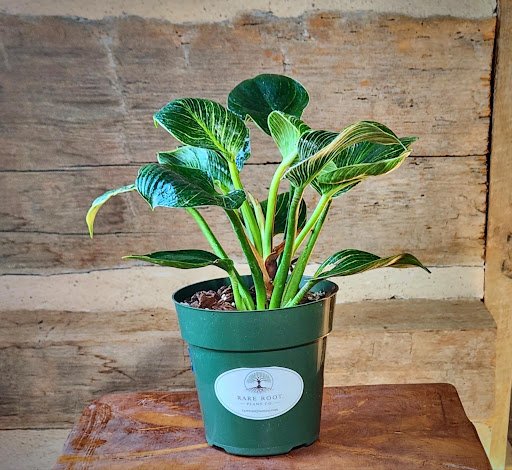
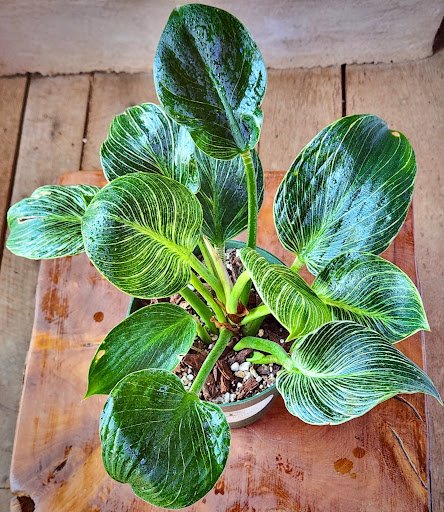
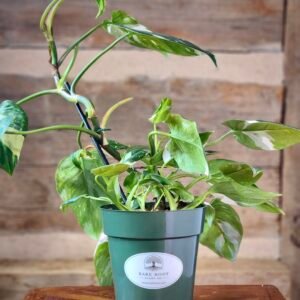
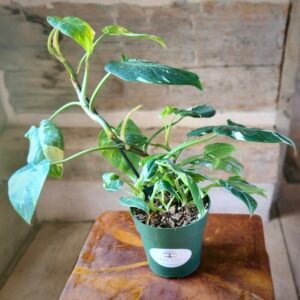
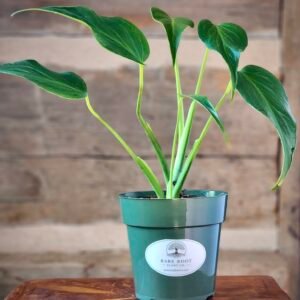
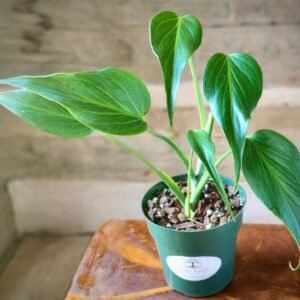
Birkin is a compact, self-heading Philodendron with thick, upright stems rather than a climbing or trailing growth habit.
Its glossy leaves develop distinctive cream, white, yellow, or light-green pinstriping, and the pattern varies naturally from leaf to leaf. The striping often becomes more pronounced as the plant matures.
Pet Safety
Not pet friendly. Philodendrons contain calcium oxalate crystals. If chewed or ingested by cats or dogs, they can cause irritation of the mouth and gastrointestinal tract, including drooling, vomiting, and difficulty swallowing. Keep Birkin away from pets and children likely to chew foliage.
Reviews
There are no reviews yet.