
Care Guide
Light
Provide bright, indirect light for healthy growth and strong coloration.
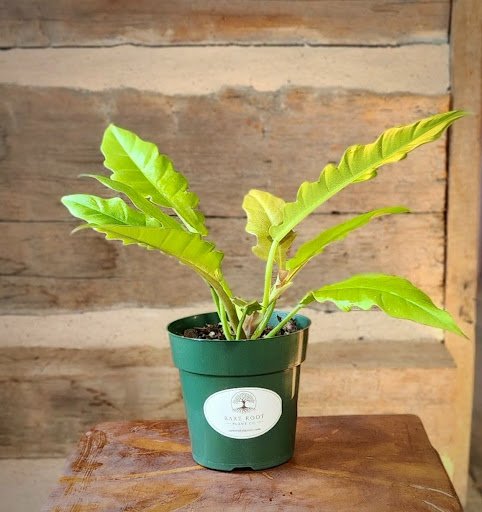
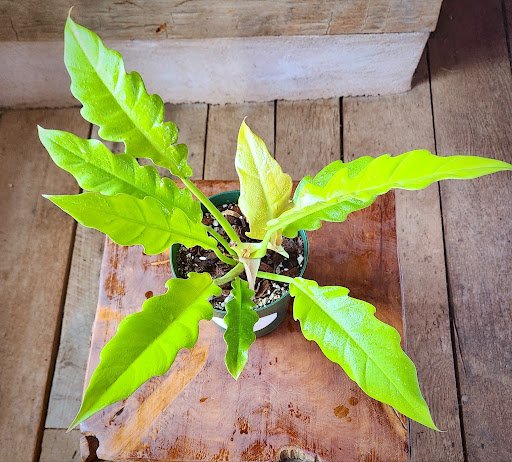
Good light is particularly important for maintaining the bright golden-chartreuse appearance of the foliage. Avoid prolonged harsh direct sun, especially on lighter-colored leaves, which can be more susceptible to scorching.
Water
Allow the upper portion of the potting mix to begin drying before watering thoroughly.
Water until excess drains freely from the pot, and don’t allow the roots to remain in standing water or consistently saturated soil.
Rather than watering according to a calendar, check the soil and learn how quickly your plant uses water in your particular home.
Humidity
Moderate humidity is appreciated, but Golden Crocodile can be grown successfully in typical household conditions.
As always, good airflow matters too. More humidity isn’t automatically better if it comes at the expense of air circulation.
Temperature
Warm, stable indoor temperatures are best. Protect the plant from cold drafts and abrupt temperature changes.
Fertilizer
Feed periodically during active growth with a balanced houseplant fertilizer according to the product directions.
Avoid overfertilizing in an attempt to make the plant grow faster or become more golden. Appropriate light, healthy roots, and consistent care are much more important.
Growth Habit
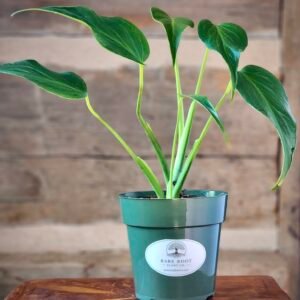
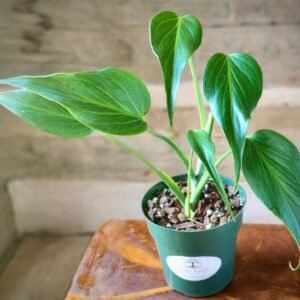
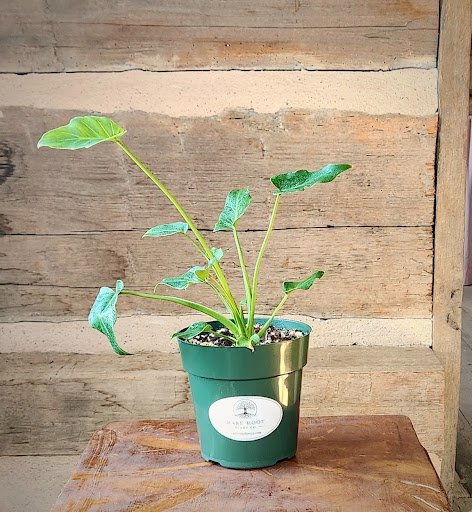
Golden Crocodile is an upright, self-heading Philodendron rather than a trailing vine.
Its elongated foliage develops strongly toothed or lobed margins that create the distinctive crocodile-like appearance behind its name. As the plant matures, successive leaves create an increasingly full and architectural form.
Pet Safety
Not pet friendly. Like other Philodendrons, Golden Crocodile contains insoluble calcium oxalate crystals and should not be chewed or ingested by cats or dogs. Keep it away from pets and small children who may chew foliage.
Reviews
There are no reviews yet.