
Care Guide
Light
Provide bright, indirect light.
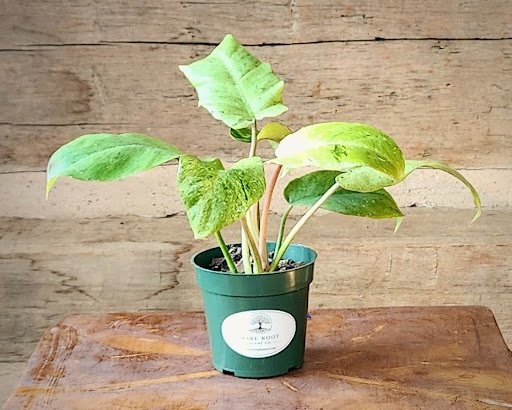
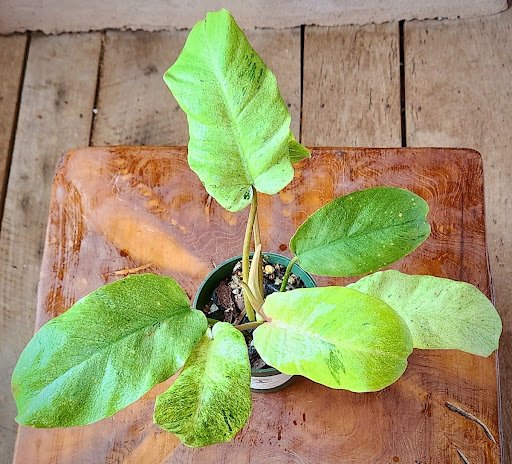
Good light supports healthy growth and helps Snowdrift maintain its distinctive foliage coloration.
Because pale areas contain less chlorophyll, protect the plant from prolonged harsh direct sunlight, which can damage or scorch lighter tissue.
Water
Allow the upper portion of the potting mix to begin drying before watering thoroughly.
Water until excess drains freely and avoid allowing the roots to remain continuously saturated.
Rather than watering on a rigid schedule, check the soil. Light, temperature, pot size, season, and active growth all influence how quickly your plant uses water.
Humidity
Snowdrift appreciates moderate humidity and may enjoy somewhat higher humidity during active growth and leaf development.
It can still be grown in normal household conditions when its overall needs are met.
And remember: increasing humidity shouldn’t mean sacrificing airflow. We’re creating a comfortable home for a plant, not sealing it inside a tropical Tupperware container.
Temperature
Warm, stable household temperatures are best.
Protect Snowdrift from cold drafts, air-conditioning vents, and abrupt temperature changes.
Fertilizer
Feed periodically during active growth with a balanced houseplant fertilizer according to the product directions.
Avoid excessive feeding in an attempt to force faster growth or manipulate foliage coloration.
Good light, healthy roots, and consistent care matter more.
Growth Habit
Snowdrift develops an upright, spreading form with substantial foliage that becomes increasingly impressive as the plant matures.
Give it enough room for its leaves to develop without being constantly brushed against or crowded by neighboring plants.
Its foliage coloration also changes as leaves mature, so don’t assume a greener older leaf means the plant has somehow “lost” what made it special.
That’s part of what Snowdrift does.
A Note About Color
This one deserves its own section.
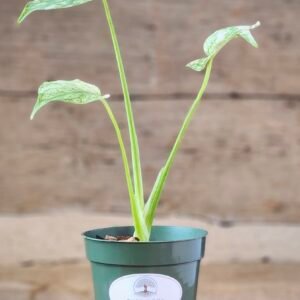
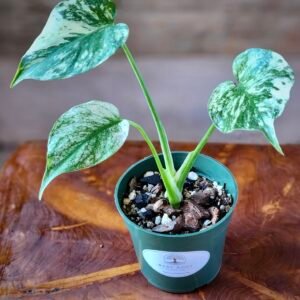
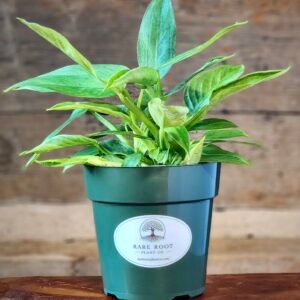
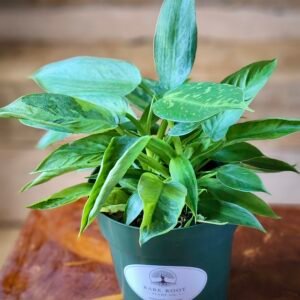
New Snowdrift foliage can emerge quite pale, displaying cream, mint, and silvery-green tones before developing additional green as the leaf ages.
That change is normal.
Please don’t compare an older leaf to a photograph of someone’s freshly emerged pale leaf and conclude that your plant has done something wrong.
And please don’t chase unnaturally pale growth at the expense of the plant’s health.
Green is not a defect.
Green is chlorophyll.
And chlorophyll is doing some rather important work around here. 🌿
Pet Safety
Not pet friendly. Like other Philodendrons, Snowdrift contains insoluble calcium oxalate crystals and can cause painful oral irritation if chewed or ingested by cats or dogs.
Keep it away from pets and children likely to chew foliage.
Reviews
There are no reviews yet.