
Care Guide
Light
Provide bright, indirect light.
Good light helps support healthy, compact growth and attractive variegation. Variegated plants contain less chlorophyll in their lighter tissue, so adequate light is especially helpful.
Protect the foliage from prolonged harsh direct sunlight, which can scorch leaves.
Water
Allow the potting mix to dry somewhat between waterings.
Peperomia’s thick leaves store water, and the plant is more tolerant of a little dryness than of roots sitting continually in wet soil.
When it’s ready, water thoroughly and allow excess water to drain freely.
And this is one where our favorite Rare Root watering advice really matters:
Check the plant. Don’t check the calendar.
A Peperomia growing beside a bright window in summer won’t necessarily use water at the same rate as one growing farther from the window in January.
Humidity
Average household humidity is generally suitable.
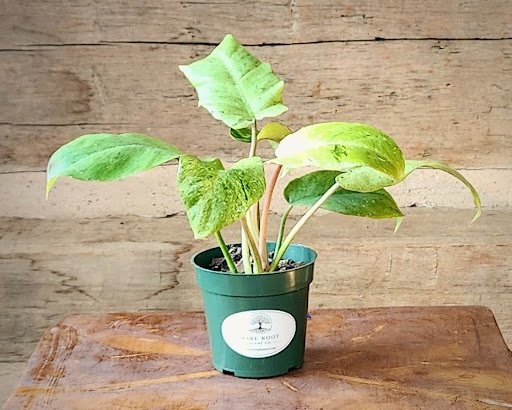
Peperomia Marble does not require unusually high humidity to grow successfully indoors, making it a nice choice for someone who doesn’t want humidity management to become part of their plant routine.
Temperature
Warm, stable household temperatures are best.
Protect the plant from cold drafts and sudden temperature changes.
Fertilizer
Feed periodically during active growth with a balanced houseplant fertilizer according to the product directions.
Peperomias aren’t heavy feeders, so more fertilizer isn’t better. Consistent care and healthy roots are far more useful than trying to push rapid growth.
Growth Habit
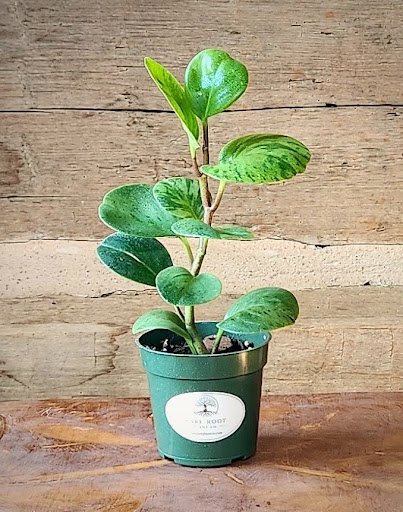
Peperomia Marble develops a compact, upright-to-bushy growth habit.
Its thick leaves and fleshy stems give the plant a substantial appearance despite its relatively modest size.
Pruning or pinching longer growth can help maintain a fuller shape if desired.
And if it flowers, don’t expect something that looks like a traditional flower.
Peperomia inflorescences are slender spikes—sometimes described as little rat tails.
Nature apparently decided those beautiful leaves had already used up the decorating budget.
A Note About Variegation
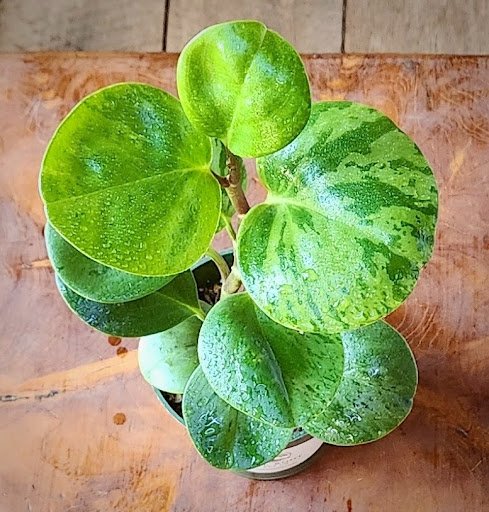
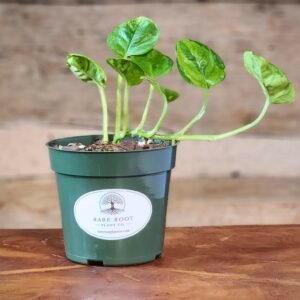
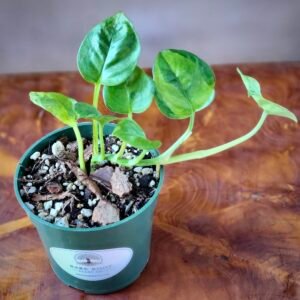
The cream, pale yellow, and green marbling can vary naturally from leaf to leaf.
Good light supports healthy variegated growth, but no two leaves need to match.
Lighter-colored areas may also show cosmetic damage somewhat more readily than fully green tissue.
As always, look at the health of the whole plant, not one imperfect spot.
Pet Safety
Pet friendly. Peperomia obtusifolia is considered non-toxic to cats and dogs.
That doesn’t mean we recommend allowing pets to eat it—ingesting enough plant material can still upset a stomach—but it’s a reassuring choice for homes with curious animals.
Reviews
There are no reviews yet.