
Care Guide
Light
Provide bright, indirect light.
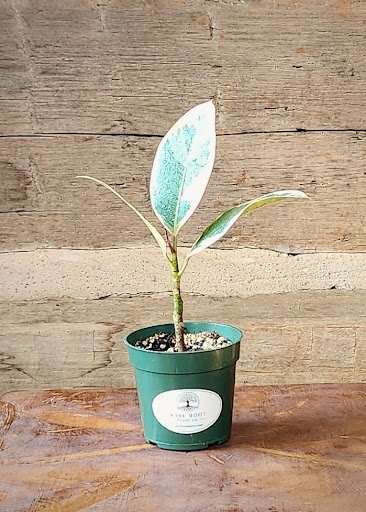
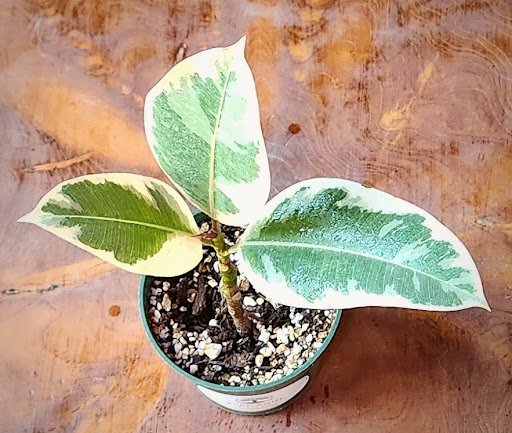
Tineke’s variegated foliage benefits from abundant light because the cream-colored portions contain less chlorophyll than green tissue.
Some gentle direct sun can be tolerated when the plant has been properly acclimated, but sudden exposure to intense sunlight can scorch foliage.
A darker location may result in slower growth and less satisfying variegated growth.
Water
Allow the upper portion of the potting mix to dry before watering thoroughly.
Then water until excess drains freely.
Rubber Trees do not appreciate having their roots kept continuously wet, so avoid watering simply because a certain number of days have passed.
Check the soil.
And don’t be surprised if the amount of time between waterings changes considerably throughout the year.
The plant gets a vote. The calendar doesn’t.
Humidity
Average household humidity is generally suitable for Rubber Trees.
Moderate humidity is welcome, but Tineke does not require greenhouse conditions to become a beautiful indoor plant.
Temperature
Warm, stable household temperatures are best.
Protect your Rubber Tree from cold drafts and abrupt temperature changes.
Ficus can sometimes respond to significant environmental changes by dropping foliage, so once you’ve found a location where the plant is happy, a little consistency can be helpful.
Fertilizer
Feed periodically during active growth with a balanced houseplant fertilizer according to the product directions.
Avoid excessive feeding in an attempt to force rapid growth.
This plant has plenty of growing ahead of it.
There’s no need to rush.
Growth Habit
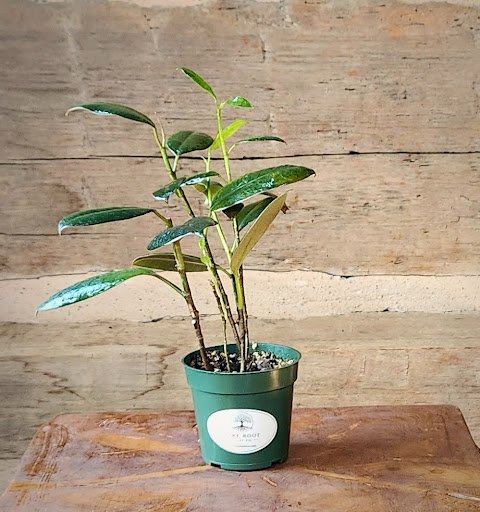
Tineke Rubber Tree has an upright, woody, tree-like growth habit.
Indoors, it can eventually become a substantial floor plant when given adequate light and room to develop.
Pruning can be used to control height and influence branching and overall shape.
And yes, eventually the cute little Rubber Tree you brought home may require considerably more real estate.
Plan accordingly.
A Note About Variegation
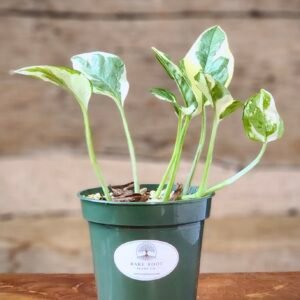
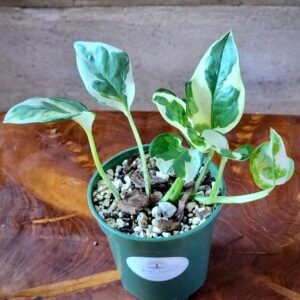
Individual leaves naturally vary in their patterns of green and cream.
New growth may also display rosy or pinkish tones that change as the leaf matures.
Good light helps support variegated growth, but don’t expect every leaf to recreate your favorite one.
The lighter portions can also show cosmetic damage more readily than fully green tissue.
As always, one imperfect spot does not define the health of the entire plant.
A Note About the Sap
Rubber Trees produce a milky latex sap when stems or leaves are cut or damaged.
The sap can irritate skin and eyes, so avoid direct contact when pruning, wash your hands afterward, and keep the sap away from your face.
Pet Safety
Not pet friendly. Rubber Tree can cause irritation and gastrointestinal symptoms if chewed or ingested by cats or dogs.
Its milky sap is also irritating.
Keep this plant away from pets and small children likely to chew the foliage.
Reviews
There are no reviews yet.