
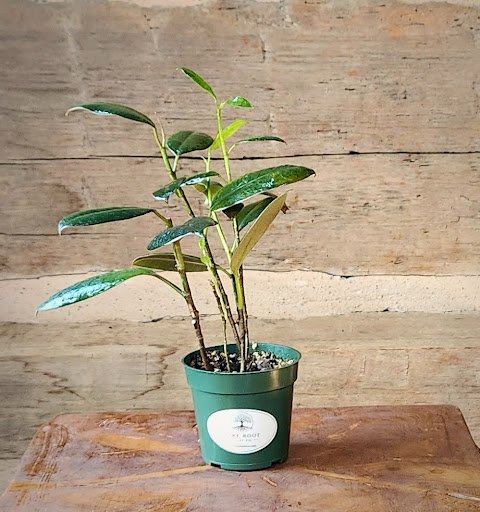
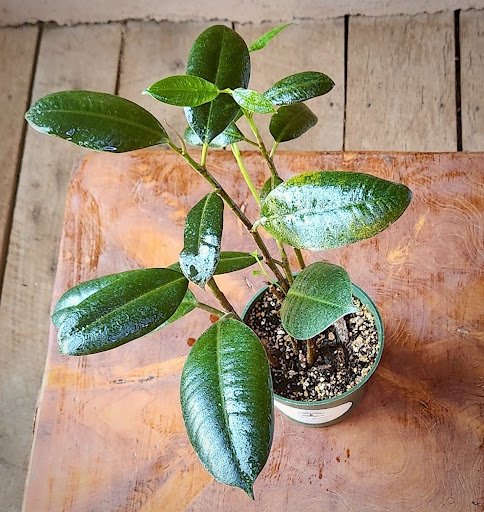
Care Guide
Light
Provide bright, indirect light for strong, healthy growth.
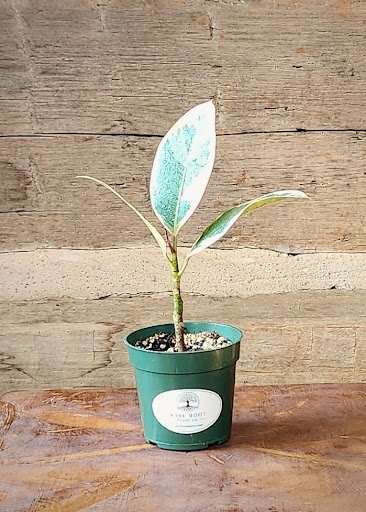
Burgundy Rubber Tree can tolerate somewhat lower indoor light, but growth may slow and its rich coloration is best appreciated when the plant receives abundant appropriate light.
Some gentle direct sunlight can be tolerated when the plant has been gradually acclimated, but avoid abruptly moving it into prolonged intense sun.
Water
Allow the upper portion of the potting mix to dry before watering thoroughly.
Then water until excess drains freely from the pot.
Rubber Trees don’t appreciate roots that remain constantly wet, so resist the temptation to water simply because a certain number of days have passed.
Check the soil instead.
Light, temperature, season, pot size, and active growth all affect how quickly the plant uses water.
The plant gets a vote. The calendar doesn’t.
Humidity
Average household humidity is generally suitable.
Burgundy Rubber Tree appreciates moderate humidity but does not require unusually humid conditions to grow successfully indoors.
Temperature
Warm, stable household temperatures are best.
Protect the plant from cold drafts and abrupt temperature changes.
Rubber Trees can react to significant environmental changes, so once you’ve found a location with suitable light where the plant is doing well, some consistency is helpful.
Fertilizer
Feed periodically during active growth with a balanced houseplant fertilizer according to the product directions.
There’s no need to push rapid growth with excessive fertilizer.
This plant has plenty of time to become a tree.
Let it.
Growth Habit
Burgundy Rubber Tree develops an upright, woody, tree-like growth habit.
Given appropriate indoor conditions and enough time, it can become a large floor plant.
Pruning can be used to control height and encourage branching if a fuller shape is desired.
And before buying, it’s worth looking around your home and asking yourself:
“If this eventually gets much bigger, will I still be happy about it?”
If your immediate thought is,
“I certainly hope it does,”
we’re probably on the right track.
Leaf Care
Those large, glossy leaves can naturally collect household dust.
Occasionally wiping them gently with a damp, soft cloth helps keep the foliage clean and allows you to inspect the plant at the same time.
No special leaf-shining product is necessary.
Sometimes a little water and a few quiet minutes with your plant are enough.
A Note About the Sap
Rubber Trees produce a milky latex sap when leaves or stems are cut or damaged.
The sap can irritate skin and eyes. Avoid direct contact when pruning, wash your hands afterward, and keep the sap away from your face.
Pet Safety
Not pet friendly. Rubber Tree can cause irritation and gastrointestinal symptoms if chewed or ingested by cats or dogs, and its milky sap is irritating.
Keep the plant away from pets and small children likely to chew foliage.
Reviews
There are no reviews yet.