
Care Guide
Light
Provide bright, indirect light.
Good filtered light supports healthy, sturdy growth.
Protect the plant from prolonged harsh direct sunlight, particularly if it hasn’t been gradually acclimated to stronger light.
Very low light can slow growth and also reduce the rate at which the potting mix dries.
Water
Allow the upper portion of the potting mix to begin drying before watering thoroughly.
Alocasias generally appreciate relatively consistent moisture during active growth, but their roots should not remain continuously saturated.
Water thoroughly and allow excess to drain freely.
And remember that water use can change considerably as light, temperature, and growth change.
Don’t make the plant obey a watering schedule. Let the watering schedule obey the plant.
Humidity
Moderate to higher humidity is appreciated.
Zebra Compact may especially benefit from increased humidity while actively growing and developing new foliage.
Good airflow remains important.
We’re aiming for comfortable tropical conditions.
Not terrarium soup.
Temperature
Warm, stable household temperatures are best.
Protect your Alocasia from cold drafts and abrupt temperature changes.
Fertilizer
Feed periodically during active growth with a balanced houseplant fertilizer according to the product directions.
Reduce feeding when growth slows significantly.
Avoid excessive fertilizer in an attempt to force faster growth.
Growth Habit
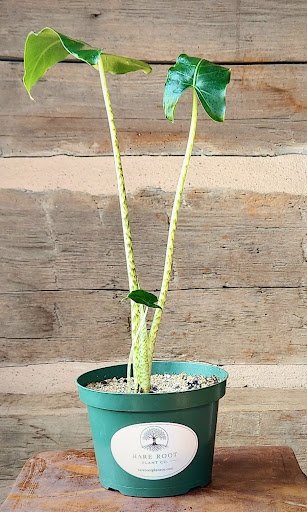
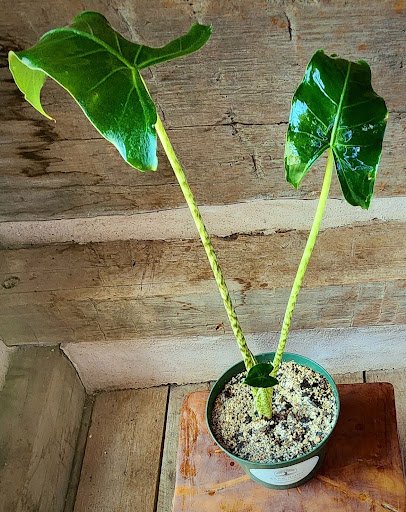
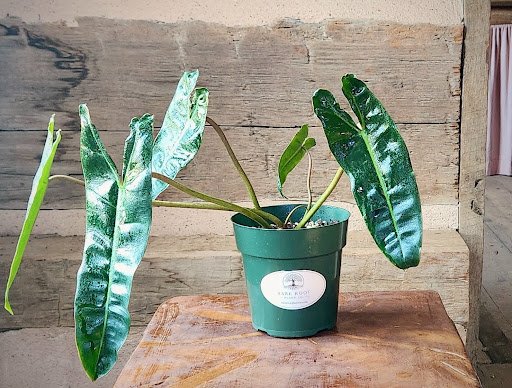
Zebra Compact develops an upright, clumping Alocasia growth habit, with individual leaves rising on patterned petioles from the plant’s underground structures.
Its compact form makes it especially appealing for smaller spaces or for someone who wants the distinctive Zebra Alocasia look without necessarily choosing a larger-growing form.
It does not require a moss pole or climbing support.
Those Striped Stems
Those beautiful “stems” are technically petioles—the stalks connecting each leaf blade to the plant.
Their contrasting pattern is one of the defining ornamental characteristics of Zebra-type Alocasias.
So this is another plant where we strongly encourage appreciating everything below the leaf too.
Sometimes the best outfit includes the pants.
Older Leaves
Individual Alocasia leaves naturally age.
An older leaf may yellow and decline while the plant continues growing, particularly when a new leaf is developing or conditions have changed.
One aging leaf does not automatically indicate a sick plant.
Look at the whole plant.
Rapid or widespread decline, however, deserves investigation of moisture, roots, temperature, light, pests, and environmental changes.
Seasonal Changes
Growth can slow when light levels decrease or temperatures become cooler.
When growth slows, the plant generally uses water more slowly.
Adjust care accordingly rather than continuing exactly the same routine year-round.
Plants experience seasons indoors too—even if our thermostats pretend otherwise.
Pet Safety
Not pet friendly. Alocasias contain insoluble calcium oxalate crystals that can cause painful oral irritation if chewed or ingested by cats or dogs.
Keep this plant away from pets and small children likely to chew foliage.
Reviews
There are no reviews yet.