
Care Guide
Light
Provide bright, indirect light.
Alocasia Zebrina appreciates abundant filtered light indoors. Protect the foliage from prolonged harsh direct sunlight, particularly if the plant hasn’t been gradually acclimated to stronger light.
Very low light can contribute to weaker growth and slower water use.
Water
Keep the potting mix evenly but not constantly wet, allowing the upper portion to begin drying before watering again.
Water thoroughly, then allow excess water to drain freely.
Alocasia roots need both moisture and oxygen, so constantly saturated soil can create serious problems.
Avoid watering according to a rigid calendar.
Check the soil and pay attention to how quickly the plant is using water under its current conditions.
Humidity
Alocasia Zebrina appreciates moderate to higher humidity.
Higher humidity can be particularly helpful during active growth and while new foliage is developing.
Good airflow remains important, especially when humidity is elevated.
Temperature
Warm, stable conditions are best.
Protect Zebrina from cold drafts and abrupt temperature changes. As a tropical plant, it does not appreciate chilly conditions.
Fertilizer
Feed periodically during active growth with a balanced houseplant fertilizer according to the product directions.
Reduce feeding when growth slows significantly.
Avoid excessive fertilizer in an attempt to force rapid growth. Healthy roots and appropriate growing conditions matter more.
Growth Habit
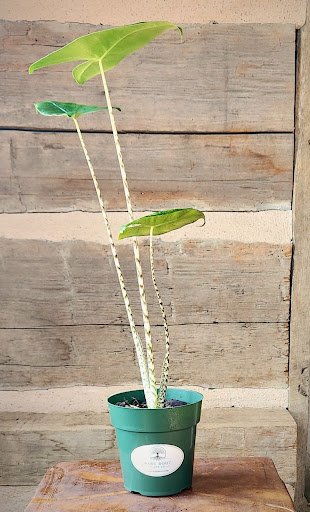
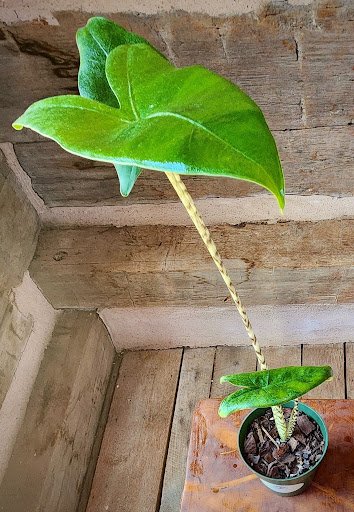
Alocasia Zebrina develops an upright, clumping growth habit, with leaves emerging individually on long, dramatically patterned petioles from the plant’s underground structures.
Unlike our climbing Philodendrons, Zebrina does not need a moss pole or other climbing support.
Give it enough room for those long petioles and leaves to spread naturally.
Those Amazing Stripes
The zebra-like patterning occurs on the plant’s petioles—the stalks connecting each leaf blade to the plant.
It is a natural characteristic of Alocasia zebrina and one of the features that makes the species so distinctive.
So yes.
This is one plant where staring at the stems is completely appropriate behavior.
Older Leaves
Individual Alocasia leaves do not live forever.
An older leaf may eventually yellow and decline, particularly while the plant is producing new growth or responding to environmental changes.
Don’t diagnose the entire plant based on one aging leaf.
Look at the overall pattern of growth and health.
However, multiple leaves declining rapidly deserves investigation of watering, roots, light, temperature, pests, and other growing conditions.
Seasonal Slowdown
Alocasia growth can slow considerably when indoor conditions become cooler or light levels decline.
When growth slows, the plant generally uses water more slowly as well.
Adjust your care to what the plant is actually doing rather than continuing a summer watering routine simply because that’s what worked in July.
Pet Safety
Not pet friendly. Alocasia zebrina contains insoluble calcium oxalate crystals and can cause painful irritation of the mouth if chewed or ingested by cats or dogs.
Keep it away from pets and small children likely to chew foliage.

Reviews
There are no reviews yet.